Liked this recipe?Let us know by giving it a star rating
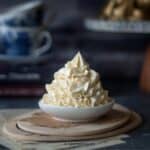
Buttercream Frosting Recipe without Powdered Sugar
Indulge in the velvety smoothness of this buttercream frosting recipe without powdered sugar, a delightful treat with a lighter sweetness that will elevate your baked creations.
Servings 1.5 cups
Calories 1510kcal
Ingredients
- 227 gms (1 cup) Unsalted butter Softened
- 113 gms Caster Sugar
- 56 gms (1/4 cup) Cream
- 1 tsp Vanilla Essence
Instructions
- Ensure the butter is at room temperature by weighing and cubing it, allowing it to soften for about 30 mins to an hour before beginning with the recipe.
- In a saucepan, gently heat the cream and sugar until the sugar dissolves, then transfer to a separate bowl, cover with a cling wrap in a way that it touches the mixture and refrigerate until completely cooled.
- Meanwhile in a large bowl, using an electric mixer beat the butter until pale and creamy, approximately 13 to 15 minutes, stopping every now and then to scrape the sides for even mixing. (Alternatively, use a stand mixer with the paddle attachment for convenience.)
- Gradually add the cooled cream and sugar mixture to the beaten butter at low speed, then increase the speed until stiff peaks form.
- If the buttercream is too liquidy, refrigerate for 5 to 10 minutes to firm it up before proceeding.
Video
Notes
- Room temperature butter: Ensure that the butter is at room temperature before starting. Softened butter is easier to cream and incorporate air into, resulting in a light and airy texture. Leave the butter out for about 30 mins to an hour or until it becomes soft enough to easily slide a finger through.
- Quality of ingredients: Always use high-quality ingredients for the best flavor and texture. Choose real butter for a rich taste, and opt for unsalted butter to have better control over the overall sweetness of the frosting.
- Creaming the butter: Cream the butter thoroughly using an electric hand mixer. This step is crucial for achieving a light, airy, and creamy consistency. Be patient and continue beating the butter until it turns pale and creamy, which usually takes around 13 to 15 minutes.
- Liquid options: While the recipe suggests using fresh cream, you have the flexibility to use other liquids such as double cream, heavy cream, half and half, milk, or even water. Adapt the liquid based on your preferences and availability, ensuring that the consistency of the frosting is achieved.
- Sugar alternatives: If you don't have caster sugar, you can use granulated sugar as a substitute. If you are reading this from India then make sure to pulse it slightly before using. Granulated Sugar, available abroad can be used as it is without having the need to pulse. For a different variation, you can also try using coconut sugar.
- Flavoring with vanilla: Choose the best quality vanilla you can find for a delicious flavor. Vanilla pods provide the most intense and authentic taste, followed by vanilla extract and vanilla essence. Add the flavoring agent at the appropriate step, such as infusing it with the cream if you're using vanilla pods. This is your classic vanilla buttercream frosting recipe
- Stiff peaks: When adding the cooled cream and sugar mixture to the creamed butter, continue beating until stiff peaks form. This indicates that the frosting has reached the desired consistency and will hold its shape when piped or spread.
- Refrigeration for consistency: If the buttercream frosting appears too liquidy or soft, you can refrigerate it for 5 to 10 minutes to allow it to firm up before using. This step helps restore the desired consistency.
- Quantity: The recipe makes 1.5 cups frosting enough to pipe simple swirls on 12 cupcakes or fill and frost a 3 layer 6 inch cake or a 2 layer 8 inch cake.
Nutrition
Calories: 1510kcal | Carbohydrates: 77g | Protein: 2g | Fat: 136g | Saturated Fat: 86g | Polyunsaturated Fat: 5g | Monounsaturated Fat: 35g | Trans Fat: 5g | Cholesterol: 368mg | Sodium: 28mg | Potassium: 77mg | Sugar: 77g | Vitamin A: 4331IU | Vitamin C: 0.2mg | Calcium: 62mg | Iron: 0.1mg
Did you make this recipe? Tag me today!Tag me @spicesandflavors to get featured on my FB and Insta pages